Category: GRANTS & RESIDENCIES

  • AES Convention and the Greater Columbus Arts Council

    I recently returned from attending the 147th AES Convention Oct-16th – 18th at the Javitts Center in New York. It was incredible! I haven’t felt this kind of excitement about my field in years! No one’s eyes glaze over at the topic of audio because EVERYONE was talking audio. Plug-ins, mics, DAWs, field solutions, workarounds. They’d lean in if you mentioned a tool that would be useful or a solution you hadn’t been able to crack. People were flinging out techniques and there wasn’t really room for anyone to try to dominate anything because there were thousands and thousands of people skilled in all different areas. What a high. This right here is why you put brainpower together.
    GCAC

    I really can’t thank GCAC, the Greater Columbus Arts Council, enough for awarding me a Professional Development Grant this year. At first I was I was aiming to work with Eddie Kramer for a week at Studios La Fabrique in the Mix With The Masters program. They approved me then I saw the grand total bill. As a freelancer in the Midwest, if I had $4,000 laying around, I would use it on audio gear. I opted for the convention for a few reasons including professional development but also checking out if this was the solution to a lack of affiliation for professionals here. It’s whole situation I’ll post about if the end goal turns out to be a thing. I use to go to conventions regularly when I lived in Chicago. I still attend any and all industry-related events here but there just are not that many. It’s depressing if I think about it too long. I should have continued these jaunts once I got my footing here years ago. Anyway, workshops first:

    “Opening Ceremonies / Awards / Keynote Speech” presented by AES President Agnieszka Roginska (New York University), Valerie Tyler (College of San Mateo), Jonathan Wyner (M Works Studios/iZotope/Berklee College of Music) and Keynote Speaker Grandmaster Flash. Awards to those who made outstanding contributions to the industry in areas of research and invention. Grandmaster Flash, an original voice of the hip-hop industry, shared some of his beat looping secrets and spoke of the changing face of music innovation and audio education.

    “Evolution of Album Production from Started to Finish” with Gloria Kaba (engineer), Heba Kadry (mastering engineer), and Simone Toress (vocal producer), moderated by Terri Winston of Women’s Audio Mission. Of course I attended the female-led workshops because my career grew in an environment that was 2% female. It is now at a whopping 5% females in the industry. This panel discussed workflow, tracking, mixing, and the production process.

    “Recording and Producing in Non-studio Spaces” presented by Keith Killen who engineered U2’s Unforgettable Fire album in a castle and Peter Gabriel’s So album in a converted cattle shed.This was moderated by Alex Case of the University of Massachusetts.

    “For the Record: Engineering Prince” moderated by Leslie Ann Jones of Skywalker Sound with Presenters Lisa Chamblee, Sylvia Massy, Peggy McCreary, and Susan Rogers. This panel discussion was organized by Women’s Audio Mission and, to my delight, featured the female engineers who worked on Prince’s records throughout his career.

    “The Loudness War is Over (If You Want It)” moderated by George Massenburg (Schulich School of Music, McGill University, Centre for Interdisciplinary Research in Music Media and Technology) and featuring panelists Serban Ghenea, Gimel “Guru” Keaton, Bob Ludwig (Gateway Mastering Studios, Inc.), Thomas Lund (Genelec), and Ann Mincieli (Jungle City Studios). This session covered the new face of the Loudness Wars, where engineers and producers hyper-compressed music so that it would play back louder than competing tracks. But with today’s streaming platforms, all music is normalized to standardized loudness levels. Unfortunately, the platforms (YouTube, Spotify, Bandcamp, Netflix, etc) have not agreed to a standard between one another but the specs are not too wide and hopefully AES can guide the industry to land on the same page and spare mastering engineers the time spent mastering for different platforms and save the musicians those costs.

    There were over 350 brands represented on the exhibit floor and I walk through each booth, trying out the products and speaking with the reps. It was especially interesting to considered how these tools might help music hobbyists, professional musicians, engineers, or schools. Most of the buzz this year was around Dante. Dante is a network protocol that isn’t new but more brands are incorporating the protocol into their products and therein lies the buzz. And of course Virtual Reality mixing held as a strong future trend.

    There were great products across the floor. I was really impressed with the ambisonic mics by Zylia which allows you to capture 360 degree audio. It’s actually 19 little digital mics in one unit. Access Analogue had an incredible idea and product where you can stream audio from your computer where it is processed and sent back in real time. And by processed, I mean run through expensive outboard audio gear controlled with robotic gears. So it’s cloud-based hardware for those who can’t afford $20,000 in outboard gear for $10 an hour. Genius. I could on about the products but basically there was a lot to learn.

    I spent some time at the Audio Builders Workshop which grew out of a Boston AES section of engineers. They design DIY kits with downloadable lesson plans for classroom and workshop groups to learn to build audio equipment. I think this is a smart tool for learning curriculums.

    Offsite, I attended the Island Records Anniversary 60th anniversary popup gathering at Dolby Atmos in SoHo. Here they showcased albums remastered in Dolby Atmos playing over 32 speakers. And later, a colleague gave us a tour of Sony where they actually calibrated my ears to listen to their 13.3 surround technology reproduced in headphones.

    The entire experience was a wonderful opportunity and I am very grateful for GCAC affording me the opportunity to reconnect with the professional community on a larger level. I did not realize how much I missed taking in this amount of collective knowledge and have since been planning to make AES convention and/or NAMM a regular annual event. I also took away renewed energy in regards to my own mixes which were at a good place but not necessarily influenced toward improvement. I feel like nothing beats awareness of what others in the arena are achieving. Reminds me of certain plants that will only grow as big as the container they are planted in.
  • Artist-In-Residency at ACPA

    Artist-In-Residency at ACPA, the Arts & College Preparatory Academy

    These days I start off my posts by saying that I am not able to update this site often. I do a new shoot or project every week with many irons in the fire. And of course creating art is a priority in my personal time. We do a decent job of keeping the After-Death Plan website and related social media updated…at the best of times.

    But I want to post about a couple of important things, my recent artist-in-residency at the Arts & College Preparatory Academy (ACPA) and also the wonderful Professional Development grant awarded to me by the Greater Columbus Arts Council.

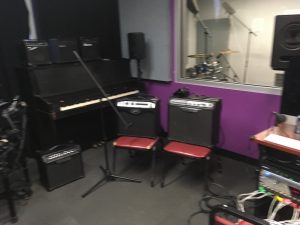
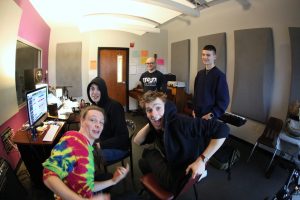
    First, the artist-in-residency: The grant was written by Ben Shinaberry at ACPA, the Arts & College Preparatory Academy, here in Columbus Ohio and awarded by the Ohio Arts Council. There is an excellent program at ACPA called Bandlab, taught by Noah Demand, where students form groups that study music, write songs, and practice consistently. The grant was to bring in an engineer/recording artist to record a song with each of the eight Bandlab bands comprised of 40 students.

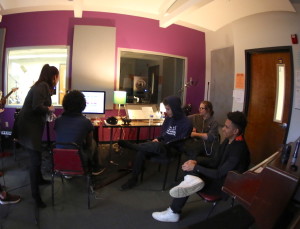
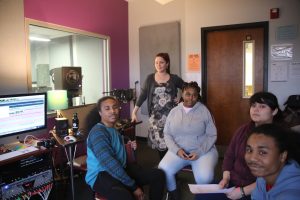
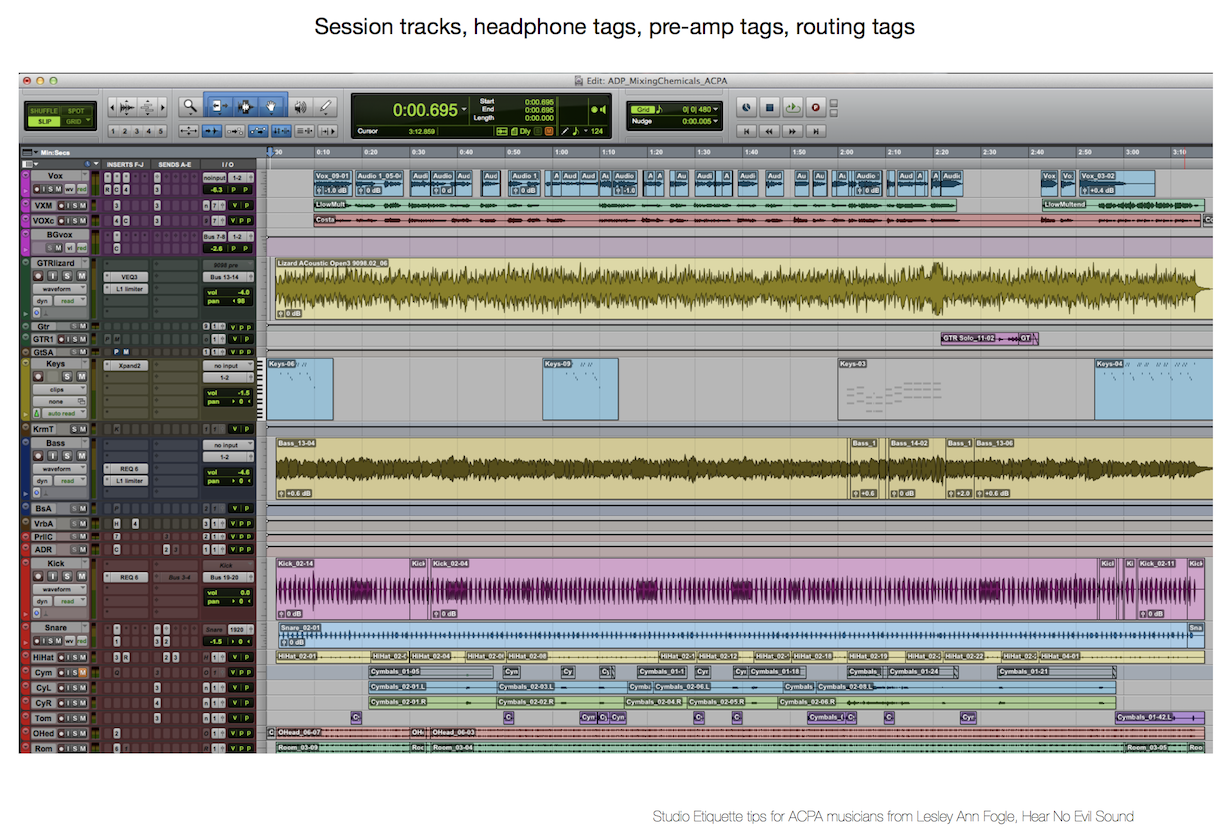
    We started with recording preparation sessions where I talked with students about what to expect during their time with me. Aided by some Song Description sheets I’d sent them to fill out, I met the students, gave them an overview of session protocol and the hardware/software we’d use, and talked about what to expect and how to get ready for their recording session. This as aided by informative visuals:

    Color Coding

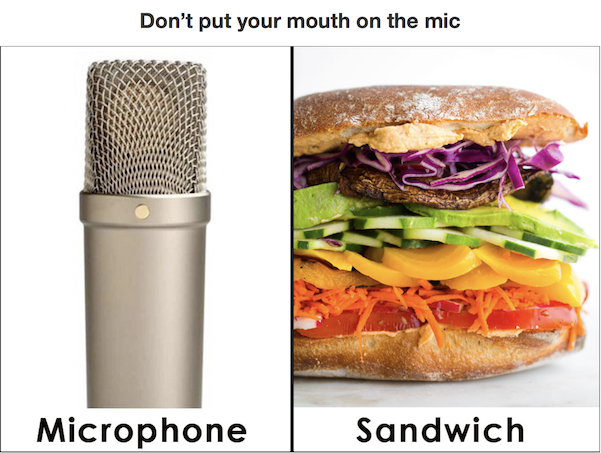
    And, at times, snarky visuals such as this one on sensitive studio mics:

    Microphone vs Sandwich

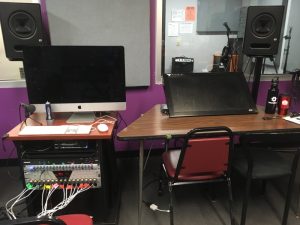
    I spent some time getting things organized: labeling snakes, setting up equipment, updating drivers, tweaking the Pro Tools session template, etc. We were set to go for the two weeks of tracking with a different band each day.

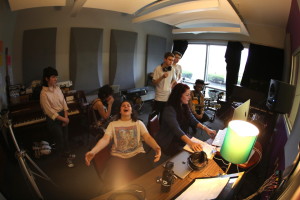
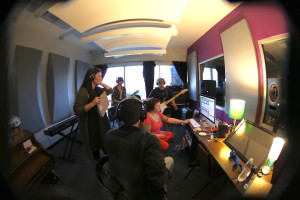
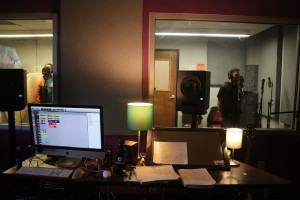
    During the prep session we’d made a list of students interested in engineering whether as a potential career or just to further their own music. Those students switched off in the engineer’s chair while I talked them through running the session. Each player connected their own cabling which was color-coded and corresponded to the patch bays, pre-amps, and session inputs; and worked with each other while we went through the lengthier process of dialing in everyone’s tone and levels. Being a whole new experience for most, we typically did quite a few takes before finding our working scaffold/take with the most solid drum foundation. Then, generally, we overdubbed or punched in any parts of instruments that needed work. From there we generally overdubbed the vocals to eliminate all of the drum and amp bleed from the original tracking. And from there we moved on to vocal mults and harmonies.

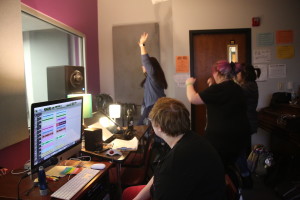
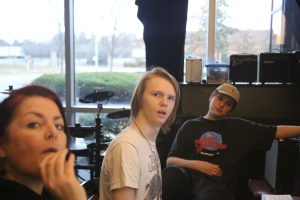
    This was a hands on, engaging experience. Different groups spent their time in different areas. One group built a blanket fort around the drum set to calm some of the room reflection, another lined the kick drum with carpet tiles, another spent the bulk of the tracking day re-arranging their song and making it stronger with better chord progressions, another focused on building both the chorus and hooks with instrumental and vocal overdubs, and another spent a large portion of time working on group vocals. One person declared they’d played the wrong chords at part of a song for months and even live because they could never hear themselves and everyone else simultaneously. And most of the singers had not used a condenser mic and were very interested in studio mic technique. I could go on and on here but the basic premise is that we came to these conclusions through discussion and the students learned a lot about technique and arrangement through this experience where every note was heard and permanently captured.

    That was about the entire school day for most of the groups though some of the groups were able to fit in some edit time after a crash course on editing. Honestly, we could easily have spent a week on concepts alone so these were action-packed days. And these Bandlab teens were all very talented and into recording the songs they had written.

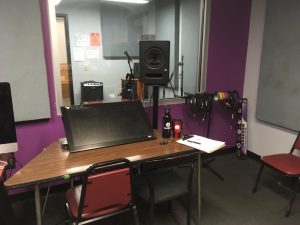
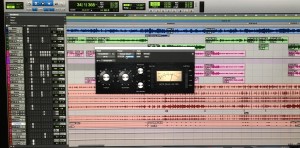
    We then moved on to mixing concepts with each of the eight groups. After rearranging the space a bit to get the monitors at ear level, I met with each group to discuss mixing concepts. Working wth their basic plug-in bundle, I imported some fx busses into their template so we could quickly activate any needed effects. We started with basic editing concepts then mostly started honing in on drum sounds individually and as a whole before incorporating the bass till the entire rhythm section gelled nicely. We went over the concepts of the frequency spectrum and where each person’s instrument sits in that spectrum in order to touch on EQ, panning, compression, delay, and the types of reverb. We touched on many mix concepts and though it takes time to train one’s ears, I hope this gave everyone the encouragement to keep experimenting with mixing.

    Parallel Compression
    Parallel Compression
    Vocal Treatment Choices
    Vocal Treatment Effects Options

    Then we moved on to finding placement and tone for the guitars and keys to sit in the mix before dressing up the vocal.

    That about summarizes the experience. Anyone who mixes knows you can work for weeks on an individual track while we created these recordings in a short amount of time. That said, the songs sound great and really don’t need to be tweaked further because there is no doubt that the next series of recordings will start st a level where these recording leave off…you know what I mean? The level of talent these young ones possess is eye-opening and I’m glad they were able to hear just how good their songs can sound in a controlled environment. I look forward to hearing the tracks assembled into an ACPA album! I’ll post info here when it’s released. It may not be mastered so crank it!

    I might also add that I wanted to take this opportunity to show female visibility to potential aspiring engineers. It took over a decade for me to see another woman working in post-production audio in the relatively large arena of Chicago. The number of women in the industry has apparently risen to a whopping 5%. I have some insight into why young women might be intimidated by this field and want to do my part in empowering future generations in going after their dreams. The inner voice is genderless.